Get in Touch with Mackayhairscissors Company
We use submitted details to respond to your quote request. Read our Privacy Policy.

MATSUOPRO is a professional hair scissors manufacturer of hair and pet grooming shears made of 440C Japanese steel, VG10, and ATS-314, with full OEM/ODM private-label service starting from 50 pcs and in-stock styles from 1 pc. Steel sourcing, CNC cutting, heat treatment, hand sharpening, and packaging are controlled internally at our two production bases in China, with nothing affecting quality or delivery outsourced to a third party.
All of the hair scissors manufacturers will claim their steel is the best and their factory is the most modern. What separates great suppliers is only visible after receiving the first order — for instance, if the delivery strays from your approved sample, if the certification actually belongs to a different plant, or if the steel can’t hold an edge to the specifications outlined in the data sheet.
This isn’t a hypothetical scenario: a professional hairstylist forum thread titled “Ruined cutting tools” captures these types of issues exactly, as described by stylists and barbers alike — we’ve detailed the numbers elsewhere on this page.
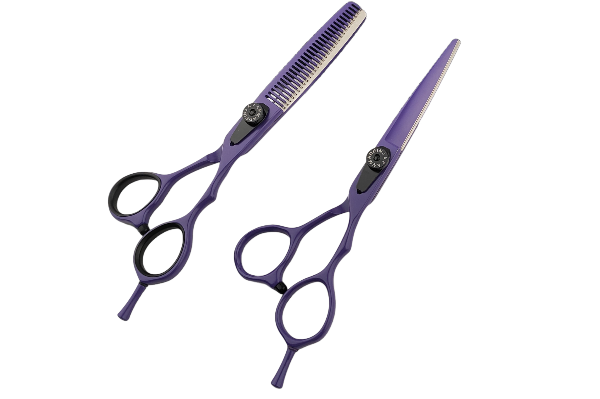
We don’t boast or puff; our answer is organizational. By keeping steel supply, CNC cutting, heat treatment, hand sharpening and inspection process inside the walls of our own two factories, nothing that compromises quality or delivery is left to a third party. We can produce an order of 50 custom pieces — instead of a container-full — to support a brand’s growth.
Get Instant Quote →The catalogues below are each tailored to a specific cutting task and a specific buyer — from high-volume wholesale hair shears to OEM private-label programmes for customers new to sourcing a factory-direct shear. Professional hairdressing, thinning and barber shears each carry different edge geometry and steel treatment, so rather than compressing everything into one generic page, we keep the technical depth on the dedicated collection page for each category — described in detail elsewhere on this site.
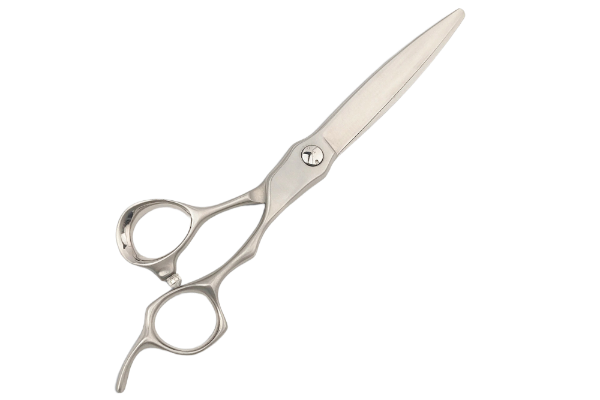
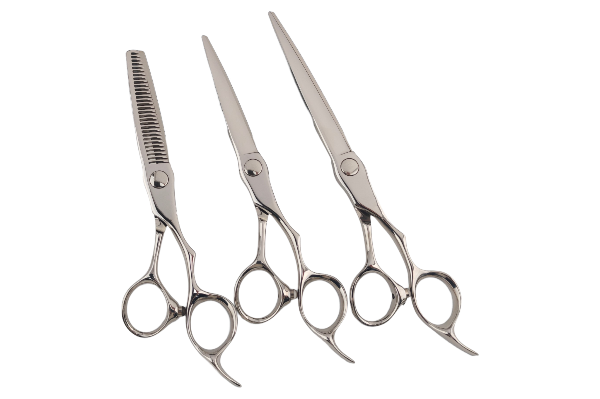
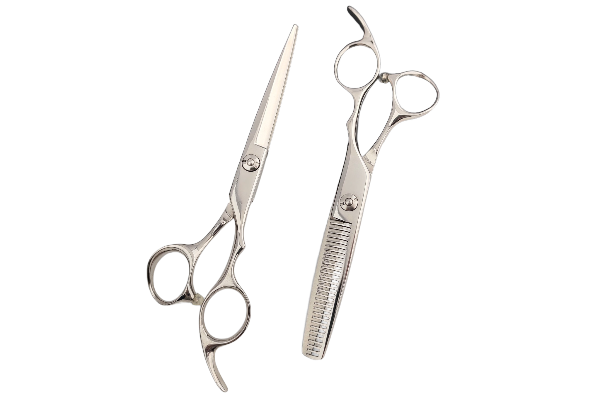
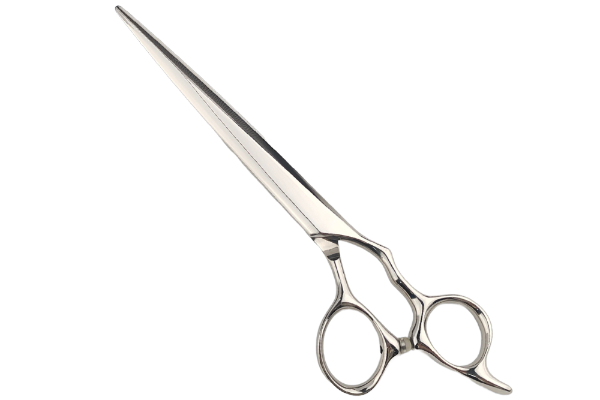
Professional, Straight-blade cutting shears in Japanese 440C steel, with an ergonomic handle, designed for point-cutting, blunt-cutting and daily salon use.
View Collection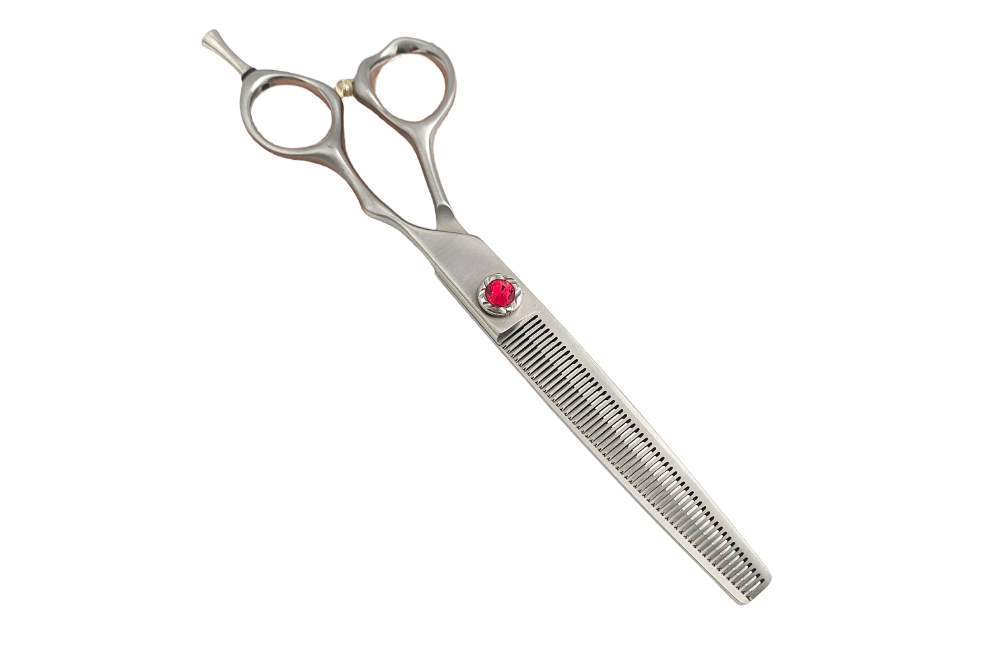
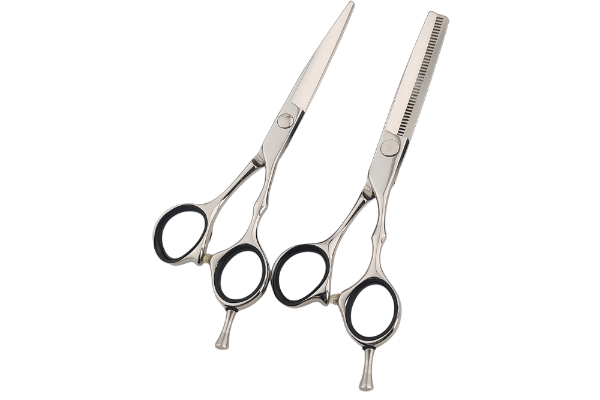
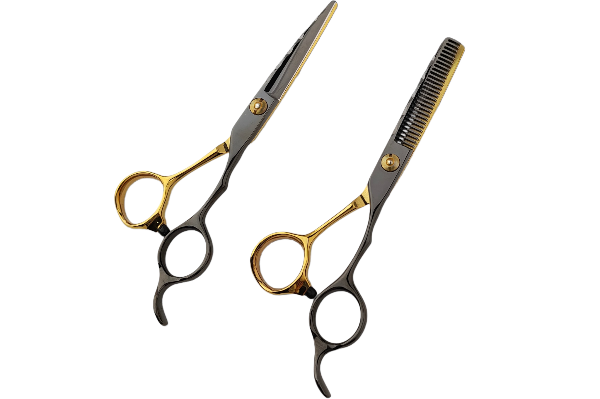
Specialized thinning shears with carefully calculated tooth counts and thinning rates to blend, de-bulk, and texturize — from light trim finishing to moderate de-bulking, including our 40-tooth+ blending shears for heavier reduction work.
See the Range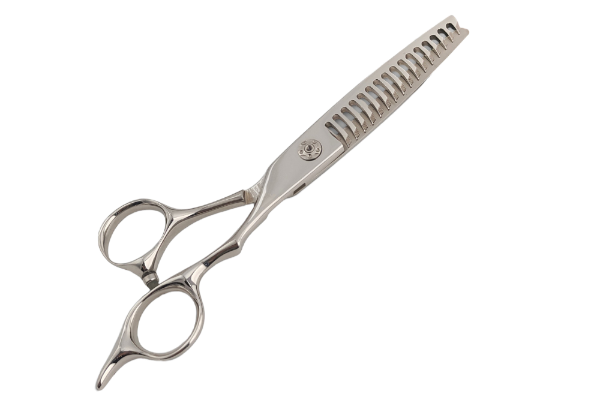
With your own private label, engrave your logo, choose your finish, and pick your packaging from 50 pieces upwards.
Start Your OEM Order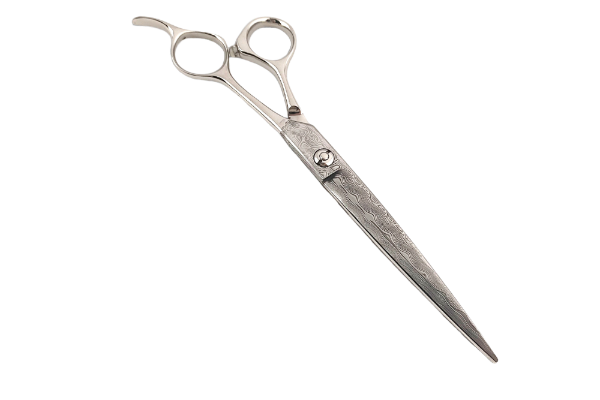
A practical reference for 440C, VG10 and ATS-314 stainless steel; details about hardness, edge-retention and sharpening tradeoffs.
Read Guide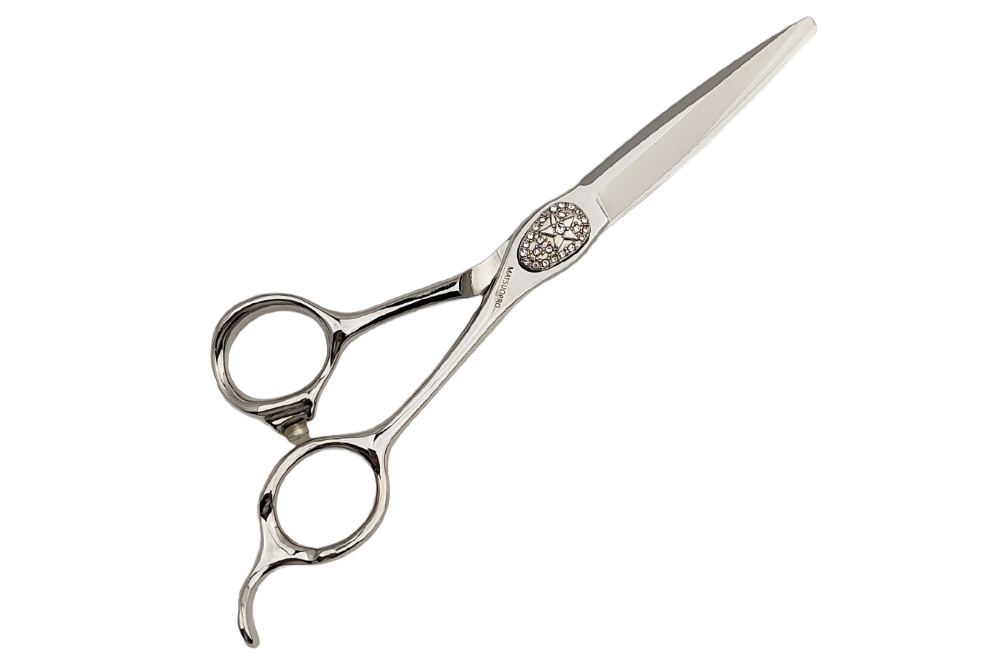
Shorter blade lengths and offset-handle variants tailored to rapid barbering speed and fade work.
Browse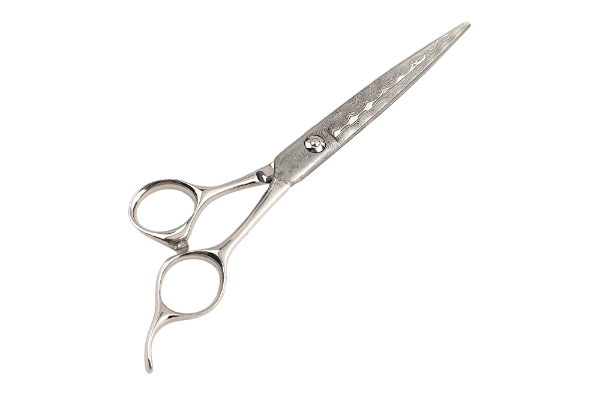
Our flagship Japanese-steel range, sourced via the same channel as the leading Japanese and German shear brands.
Explore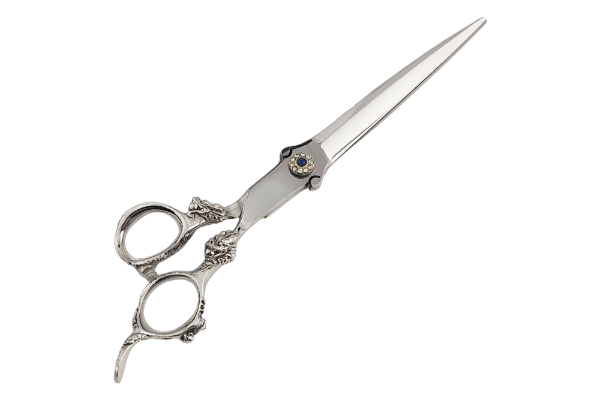
Curved, straight, and thinning shears purpose-built for professional dog groomers, using the same steel and QC line as our hair shears — including rounded safety-tip shears for puppies and kittens where a blunted point matters most.
See ShearsMATSUOPRO is a vertically integrated factory – from raw Japanese steel to the finished hand-honed shear, everything is produced in-house. We keep nothing off-site, and everything critical under our control — including product quality and lead times.
Covering 2000+ sq m with a team of 100+, MATSUOPRO has been honing and servicing scissors for 12 years from our two established hairdressing scissor manufacturing hubs in China: our southern facility in Guangzhou and our eastern base in Zhangjiagang, located in the Yangtze River Delta.
Our factory facilities support the complete process under one roof: state-of-the-art CNC machining centers, vacuum and cryogenic heat-treatment furnaces, dedicated precision grinding lines, PVD coating, laser engraving services, and specialized hand-honing benches where artisans perfect every premium blade.
We use premium Japanese steel, our ATS-314 plate sourced direct from Hitachi Group, Japan.
Precise, repeatable blade geometry.
Hardened to 60-62 HRC (up to 64 HRC on our cobalt flagship lines).
The Japanese convex edge is hand-finished to a mirror polish.
PVD coating, polishing, custom colors.
Each pair is tuned for perfect, balanced operation.
Sharpness, balance, tension and finish are inspected individually.
Custom logo engraving and packaging to your specification.
“CNC cutting gets every blade to the same starting geometry before a single one reaches the honing bench. That consistency is what makes hand-honing scalable for a 500-piece OEM order instead of just a one-off custom pair.”
Production Quality Lead, MATSUOPRO Factory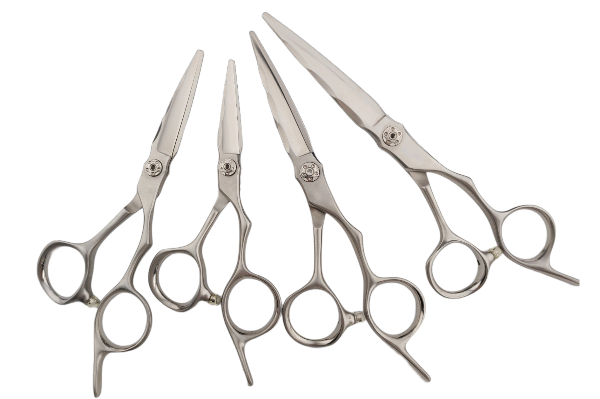
Buyers generally overlook the fourth step in the scissor production process. CNC grinding gets our blade close to its required geometry; however, the hand-honing pass that follows is key in determining both how the edge feels to a stylist and how long it retains its edge between professional services. It’s here where handmade tradition is merged with modern precision — unlike a completely automated grind which can attain a specific hardness level without ever achieving the consistent convex geometry that results from Japanese-style honing.
To remain on the cutting edge of the manufacturing process, our craftsmen spend 2 weeks, twice annually (4 weeks per year total), in the premier scissor workshops in Japan and Korea. Learning and sharing production know-how enables us — a mid-sized factory — to deliver and match the feel and finish of time-tested Japanese and German brands without the associated overheads.
Specifications / InquireHardness isn’t automatically the right upgrade. Five separate technical and professional reports that we read basically reach this agreement: you need hardness to accommodate your usage and the intensity with which you use that steel, and price is going to be a poor marker on what steel is best for a specific stylist. The high-volume barber doing fades all day and the full-service salon all-rounder have different trade-offs — they don’t share the same “hardest steel is best” solution.
Independent technical sources have placed ATS-314’s hardness between HRC 59-63 depending on how it has been tempered and depending on its origin, and one comparison described it as the toughest of the 3 basic steels. Our production target for a standard blade is HRC 60-62, which fits exactly in the middle of the described hardness zone – instead of at the edges. Where this also fits with the intended ATS-314 origin: one supply chain article explains the usage of ATS-314 plate for Hitachi Metals in Japan, where we in return get our ATS-314 steel from.
The real cost of a shear gone wrong never appears on the invoice. It will materialize months later, in sharpen invoices, the number of flaws on a large order of them, or the sheer number of stylists that leave a brand after one less than stellar use – and professionals will expound on it where it actually happens.
Source: independently reported buyer accounts and published industry defect-rate benchmarks; figures describe category-wide patterns, not MATSUOPRO-specific test results. See References below.
I’ve had two working stylists who have told me the exact same failure mode in their own words: one said they were “out $1,500” after a shear was “ruined” by having them improperly sharpened after just a few uses. The second said he spent “thousands of dollars to replace everything” after a botched sharpening job. On their own, multiple threads in professional sharpening forums identify the same cause – using a generic knife sharpening stone on the internal bevel of a hair shear is a classic way to ruinate an expensive blade, which is the whole point of requiring a hard steel (again, see comparison graphic) and a sharpener who actually sharpens shears and not general knives.
Every one of those four costs traces back to the same two decisions: which steel grade actually went into the batch, and whether quality control happened inside the factory that cut the steel or several steps removed from it. That’s the structural reason factory-direct sourcing with piece-by-piece QC works, not a marketing claim.
These are representative sourcing situations our process is built to handle – illustrative scenarios based on the OEM and wholesale inquiries we typically see, not individual customer case studies with verified names or figures.
A brand entering the hair-tools category for the first time. Starts with a 50-unit custom OEM order to validate steel grade, handle finish, and packaging before committing to a larger production run.
A wholesale distributor testing a new supplier. Orders in-stock styles from 1 unit to verify blade consistency and finish quality against their existing supplier before switching volume over.
A multi-location salon group replacing damaged inventory. Moves to a factory-direct relationship with documented QC after tracing repeated in-house sharpening damage back to inconsistent third-party steel quality.
Quality is controlled at every one of the 8 stages above, and every pair is inspected before it ships. Our factory is audited to BSCI and SGS standards, follows an ISO 9001 quality system, and partners with a national-level tools-and-hardware quality inspection center, with third-party hardness and material reports available on request. BSCI itself is not a single pass/fail badge; it is amfori’s ongoing social-compliance monitoring process, audited by accredited third parties like SGS against a defined code of conduct – the honest version of a certification claim, and a more specific one than a supplier simply stating it is “certified.”
Alongside full OEM/ODM support — including custom steel, handles, finishes, engraving, and packaging — we offer genuinely low minimum order quantities: from 50 pcs for custom orders, and we even stock ready-made styles starting from 1 unit.
Once buyers have checked a certificate is for the correct facility and have priced in the other hidden cost outlined above, what they almost always ask is, what’s it going to be like doing business with you — and is ordering here complex and opaque? A professional-standard sharp edge shouldn’t be out of the reach for a growing brand.
| Order Path | Minimum Quantity | Best For | What’s Included |
|---|---|---|---|
| In-Stock Standard | 1 unit | Sampling, small salons, distributors testing the line | Standard finish and handle, no engraving |
| Custom OEM/ODM | 50 pcs | Brands launching a private-label line | Steel choice, handle finish, custom color, logo engraving, custom packaging |
We don’t show a universal number here as it does depend on the steel chosen, the quantity ordered and the complexity of design you’re after and a hair scissors manufacturer giving you the same quoted lead times for 1-unit samples and 5,000-unit OEM orders isn’t being honest with you. We promise you structurally that with steel intake, heat treatment, hand finishing and packaging all done in-house at our two own facilities, we’re not waiting for any subcontracting partner to keep us back — we control both quality and lead times ourselves.
Tell us the grade of steel, length of blade and quantity you’re aiming for — we’ll confirm with you the MOQ and options for customisation of such specific needs.
We work with the handle finish, colour, engraving and packaging with you to ensure the sample corresponds with your final order for OEM/ODM customers.
Third party testing for hardness or other material tests can be provided for the factory that your order is manufactured at.
Discover our step-by-step production workflow, from raw alloy selection and CNC precision machining to traditional Japanese hand-honing techniques.
Compare metallurgical properties of different steel alloys to determine the optimal hardness and edge retention for your target market.
Analyze true procurement costs by factoring in maintenance frequency, tool lifespan, and supply chain markups.
Evaluate the margin differences and lead-time advantages of partnering directly with our manufacturing facility.
Review our standard operating procedures for OEM/ODM private labeling, from initial prototyping to bulk production.
The first check that we advise is the steel grade and the heat treatment hardness. Most reputable manufacturers will specify steel grade (e.g. 440C, VG10, ATS-314 etc.) instead of a generic “premium stainless steel.” The second, the most important, check is the supplier’s readiness to provide a third party test for the heat treatment hardness, or the material make-up of the exact order from their specific manufacturing base.
MATSUOPRO shears are manufactured in China with two facilities – one in Guangzhou and one in Zhangjiagang, located in the Yangtze River Delta — a region known for its strength in scissor manufacturing. Our raw materials, such as ATS-314 steel plates sourced from the Japanese Hitachi Group, are sourced abroad.
440C, VG10 and ATS-314 are featured in our standard collections, heated to 60-62 HRC. For our superior cobalt alloy line, this is raised up to 64 HRC. Our chart above will show you which grade best suits your requirements.
MATSUOPRO has been manufacturing since 2014 — over 12 years — growing from a small workshop into a two-site precision manufacturing company with a 2,000+ square-metre facility and a team of over 100 people.
There’s no universally “better” choice – VG10’s cobalt gives it an edge-life advantage over 440C at a given hardness, while 440C is generally more accessible for in-house resharpening and can with stand more volume day-to-day. The best choice for you hinges on whether you’ll be sending your blades out for professional sharpening or doing touch-ups yourself on an ongoing basis.
There isn’t a single manufacturer that produces the “best” scissor across every price point and application. In fact, quality depends on a host of factors – including the specific grade of steel, heat-treatment process, hand-honing skill of the technician, and quality control disciplines at the manufacturing plant – all of which vary, even among those that exist in the same country. Reliable, verifiable quality signs include clearly stated steel grades, reported hardness, and third-party audits tied directly to a given manufacturing facility, rather than hyperbolic claims.
We can’t speculate on other brands’ manufacturing facilities. But what we can assure you is that our shears are manufactured at two facilities in China (Guangzhou and Zhangjiagang), use Japanese-sourced steel with named grades, and can provide third-party hardness and material documentation from the specific factory that your order is fulfilled from, upon request.
Yes, and most practicing stylists have experienced it. One stylist described being out $1,500 after their shear was “ruined” by improper Sharpening, while another recounted that it had cost her “thousands of dollars to replace everything.” In both cases, the culprit was the same: a generic knife-sharpening stone used on the shear’s internal bevel, rather than having it sharpened by a specialist who works on hair shears.
Working stylists most commonly attribute this to a handle geometry that isn’t suitable for the way the tool is held ergonomically over many hours of use – the phenomenon referred to in professional circles as “wrist pain that starts by noon.” Rarely is it the blade steel itself. Instead, it’s typically an improper handle fit issue that, over time, accumulates and exacerbates like the $1,500 damage and 15% batch-defect figures outlined above. It’s a real consideration when deciding what shear you plan to use on a daily basis.